
Oral surgery
Oral surgery sounds intimidating to many patients — often because it’s unfamiliar, not because it’s extreme. At its core, oral surgery refers to minor surgical procedures performed in the mouth to resolve problems that cannot be addressed with standard dental treatment alone. These procedures are common, controlled, and carefully planned. When done properly, they are predictable and manageable for patients. At our clinic, oral surgery is approached with one principle in mind: intervene only when it genuinely improves long-term outcomes. We prioritize clear diagnosis, conservative decision-making, and proper pain control. Patients are informed before treatment begins — what is being done, why it’s necessary, and what recovery typically looks like — so there are no surprises.
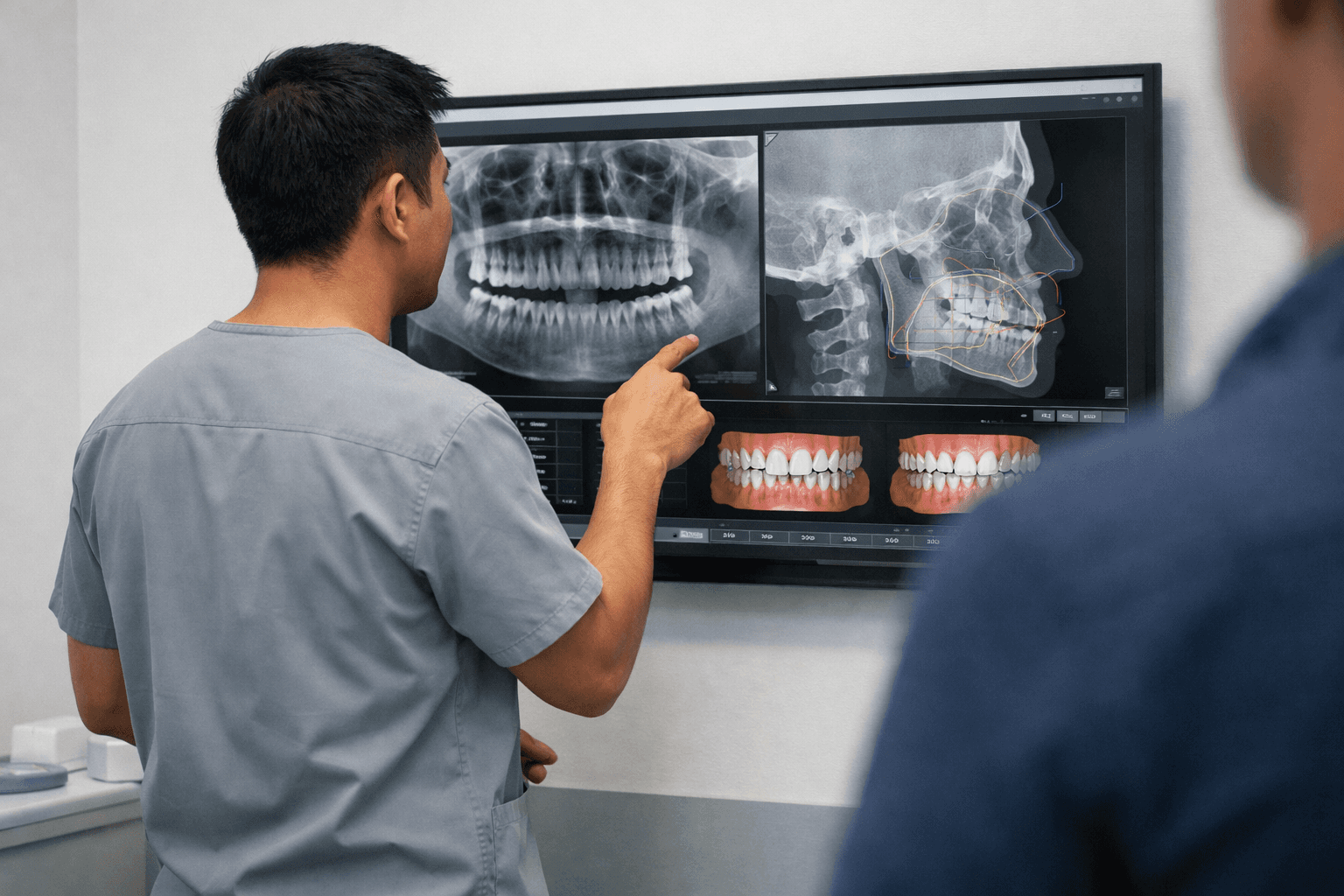
Tooth Extraction (Anterior & Posterior)
Extractions may be recommended when a tooth is too damaged to be restored or poses a risk to surrounding teeth and bone.
Anterior (front) teeth extractions are usually more straightforward
Posterior (back) teeth may require additional care due to root complexity
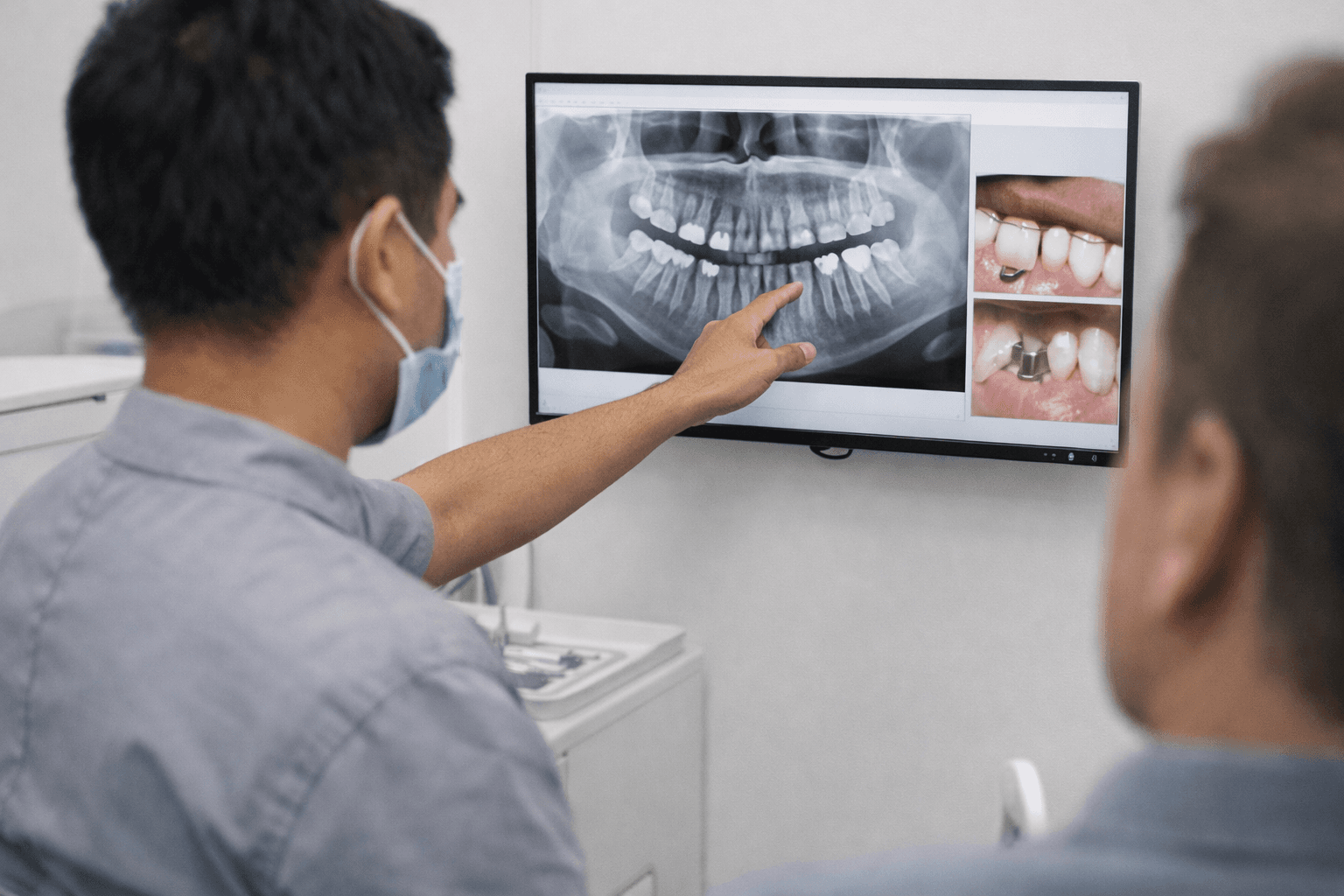
Each case is assessed individually using X-rays to determine the safest approach. Whenever possible, alternatives to extraction are discussed first.
Wisdom Tooth Extraction
Wisdom teeth can cause pain, crowding, infection, or damage to nearby teeth if they do not erupt properly.
Wisdom tooth removal is recommended only when there is a clear clinical reason, such as:
Recurrent infection
Impacted or partially erupted teeth
Pressure on adjacent teeth
Surgical planning is done carefully to minimize trauma and support smoother healing.
Surgical Extraction
Surgical extraction is required when a tooth cannot be removed safely through standard extraction techniques.
This may apply to teeth that are:
Severely broken
Fractured below the gum line
Anchored by complex root structures
Complicated by infection or previous treatment
The procedure is planned using diagnostic imaging to ensure precision and control throughout the process.
Gingivectomy
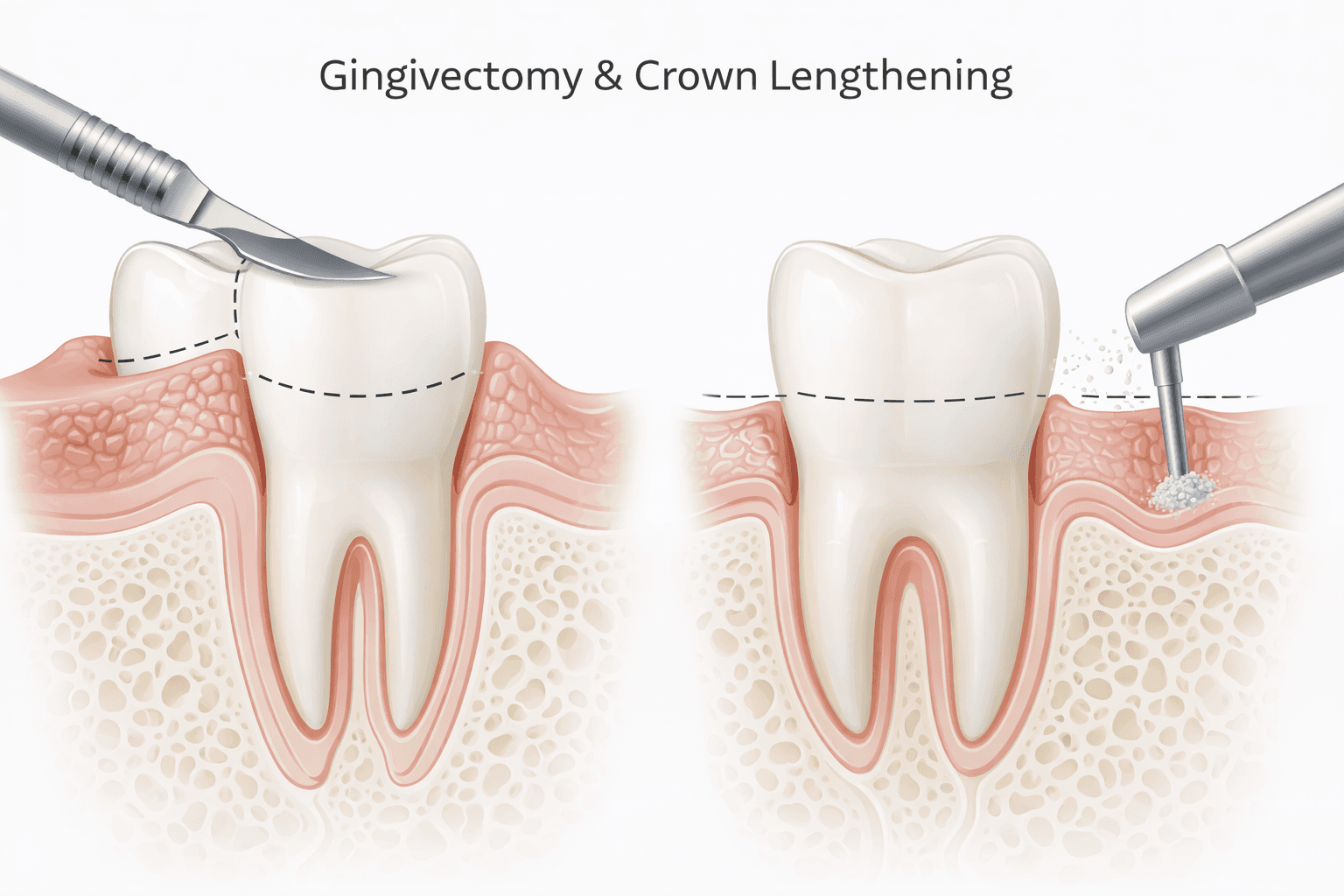
A gingivectomy involves the careful removal of excess or diseased gum tissue.
This procedure may be recommended to:
Improve gum health
Reduce infection risk
Improve access for proper cleaning
Enhance function or aesthetics
The approach is conservative and targeted, focusing only on the tissue necessary for long-term stability.
Crown Lengthening
Crown lengthening adjusts the gum and, in some cases, bone level around a tooth to expose more of the natural tooth structure.
This may be needed to:
Support restorative treatments such as crowns
Address uneven gum lines
Improve long-term tooth stability
The goal is function first, with aesthetics as a secondary benefit when appropriate.
When Surgical Extraction Is Recommended
Surgical extraction is considered only after careful evaluation.
Common reasons include:
Teeth that cannot be restored reliably
Structural damage below the gum line
Infections affecting surrounding bone
Failed previous treatments
If preserving the natural tooth is realistic, that option is discussed first. Surgery is never positioned as the default solution.
Pain Control: What Patients Usually Worry About Most
Pain is the most common concern — and the one patients are often most anxious about.
Procedures are performed under local anesthesia, adjusted according to each patient’s condition and comfort. Adequate numbness is confirmed before treatment begins.
During the procedure, patients usually experience pressure rather than pain. If discomfort arises, anesthesia is reassessed immediately. The focus is on control, not speed.
A Conservative Surgical Philosophy
We prioritize preserving natural teeth whenever possible. Surgery is used only when it offers the most reliable long-term outcome.
When surgery is required, the approach is:
Structured
Measured
Designed to minimize trauma to surrounding tissue
This supports better healing and reduces post-operative discomfort.
Recovery and Aftercare (Case by Case)
Recovery varies depending on:
Procedure type
Tooth position
Individual healing response
Some patients return to normal activity quickly, while others may need additional rest. Expectations are discussed before treatment, not after.
Clear post-operative instructions and follow-up care are provided to ensure proper healing.
A Calm, Professional Environment
Procedures are performed in a properly equipped treatment room, supported by diagnostic imaging and clear clinical protocols.
Patients are guided through decisions without pressure. Questions are encouraged. Treatment is never rushed.
Tooth Extraction (Anterior & Posterior)
Extractions may be recommended when a tooth is too damaged to be restored or poses a risk to surrounding teeth and bone.
Anterior (front) teeth extractions are usually more straightforward
Posterior (back) teeth may require additional care due to root complexity
Each case is assessed individually using X-rays to determine the safest approach. Whenever possible, alternatives to extraction are discussed first.
Wisdom Tooth Extraction
Wisdom teeth can cause pain, crowding, infection, or damage to nearby teeth if they do not erupt properly.
Wisdom tooth removal is recommended only when there is a clear clinical reason, such as:
Recurrent infection
Impacted or partially erupted teeth
Pressure on adjacent teeth
Surgical planning is done carefully to minimize trauma and support smoother healing.
Surgical Extraction
Surgical extraction is required when a tooth cannot be removed safely through standard extraction techniques.
This may apply to teeth that are:
Severely broken
Fractured below the gum line
Anchored by complex root structures
Complicated by infection or previous treatment
The procedure is planned using diagnostic imaging to ensure precision and control throughout the process.
Gingivectomy
A gingivectomy involves the careful removal of excess or diseased gum tissue.
This procedure may be recommended to:
Improve gum health
Reduce infection risk
Improve access for proper cleaning
Enhance function or aesthetics
The approach is conservative and targeted, focusing only on the tissue necessary for long-term stability.
Crown Lengthening
Crown lengthening adjusts the gum and, in some cases, bone level around a tooth to expose more of the natural tooth structure.
This may be needed to:
Support restorative treatments such as crowns
Address uneven gum lines
Improve long-term tooth stability
The goal is function first, with aesthetics as a secondary benefit when appropriate.
When Surgical Extraction Is Recommended
Surgical extraction is considered only after careful evaluation.
Common reasons include:
Teeth that cannot be restored reliably
Structural damage below the gum line
Infections affecting surrounding bone
Failed previous treatments
If preserving the natural tooth is realistic, that option is discussed first. Surgery is never positioned as the default solution.
Pain Control: What Patients Usually Worry About Most
Pain is the most common concern — and the one patients are often most anxious about.
Procedures are performed under local anesthesia, adjusted according to each patient’s condition and comfort. Adequate numbness is confirmed before treatment begins.
During the procedure, patients usually experience pressure rather than pain. If discomfort arises, anesthesia is reassessed immediately. The focus is on control, not speed.
A Conservative Surgical Philosophy
We prioritize preserving natural teeth whenever possible. Surgery is used only when it offers the most reliable long-term outcome.
When surgery is required, the approach is:
Structured
Measured
Designed to minimize trauma to surrounding tissue
This supports better healing and reduces post-operative discomfort.
Recovery and Aftercare (Case by Case)
Recovery varies depending on:
Procedure type
Tooth position
Individual healing response
Some patients return to normal activity quickly, while others may need additional rest. Expectations are discussed before treatment, not after.
Clear post-operative instructions and follow-up care are provided to ensure proper healing.
A Calm, Professional Environment
Procedures are performed in a properly equipped treatment room, supported by diagnostic imaging and clear clinical protocols.
Patients are guided through decisions without pressure. Questions are encouraged. Treatment is never rushed.
More Service
More Service
Other specific dental treatments we offer
Other specific dental treatments we offer
Opening Hours
Monday - Friday
08:30AM - 12:00PM, 01:00PM - 6:00PM
Saturday
08:00AM - 12:00PM, 01:00PM - 6:00PM
Sunday
08:00AM - 02:00PM
Service Location
Opening Hours
Monday - Friday
08:30AM - 12:00PM, 01:00PM - 6:00PM
Saturday
08:00AM - 12:00PM, 01:00PM - 6:00PM
Sunday
08:00AM - 02:00PM
Service Location
Opening Hours
Monday - Friday
08:30AM - 12:00PM, 01:00PM - 6:00PM
Saturday
08:00AM - 12:00PM, 01:00PM - 6:00PM
Sunday
08:00AM - 02:00PM
Service Location