
Root Canal Treatment
Root canal treatment focuses on removing the source of infection and preserve the natural tooth whenever possible.
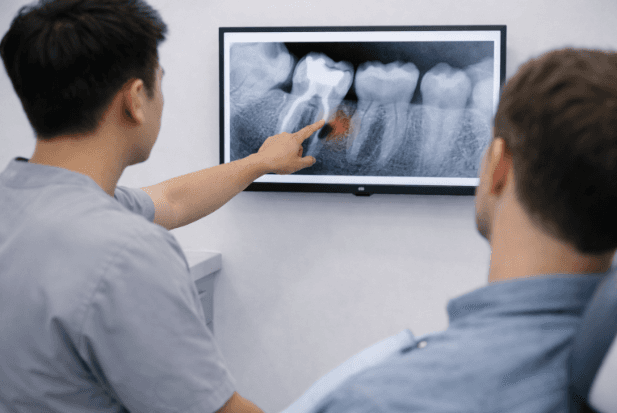
Understanding the Problem Inside the Tooth
Inside every tooth is a small chamber containing nerves and blood vessels, known as the pulp. When this tissue becomes infected — due to deep decay, cracks, trauma, or repeated dental work — the infection cannot heal on its own.
If left untreated, it can lead to:
Increasing pain and sensitivity
Swelling or abscess formation
Spread of infection to surrounding bone
Eventual tooth loss
Root canal treatment addresses the issue at its source, rather than masking symptoms.
Pulp Devitalization: Stabilizing Acute Pain
In cases of severe or acute pain, pulp devitalization may be used as an initial step. This process reduces nerve activity within the tooth, helping to stabilize symptoms and make further treatment more manageable.
This is not a shortcut or temporary fix, but a controlled step within a structured treatment plan, especially useful when inflammation is high.
Root Canal Treatment (Anterior & Posterior Teeth)
Root canal procedures differ depending on tooth position and structure.
Anterior Teeth (Front Teeth)
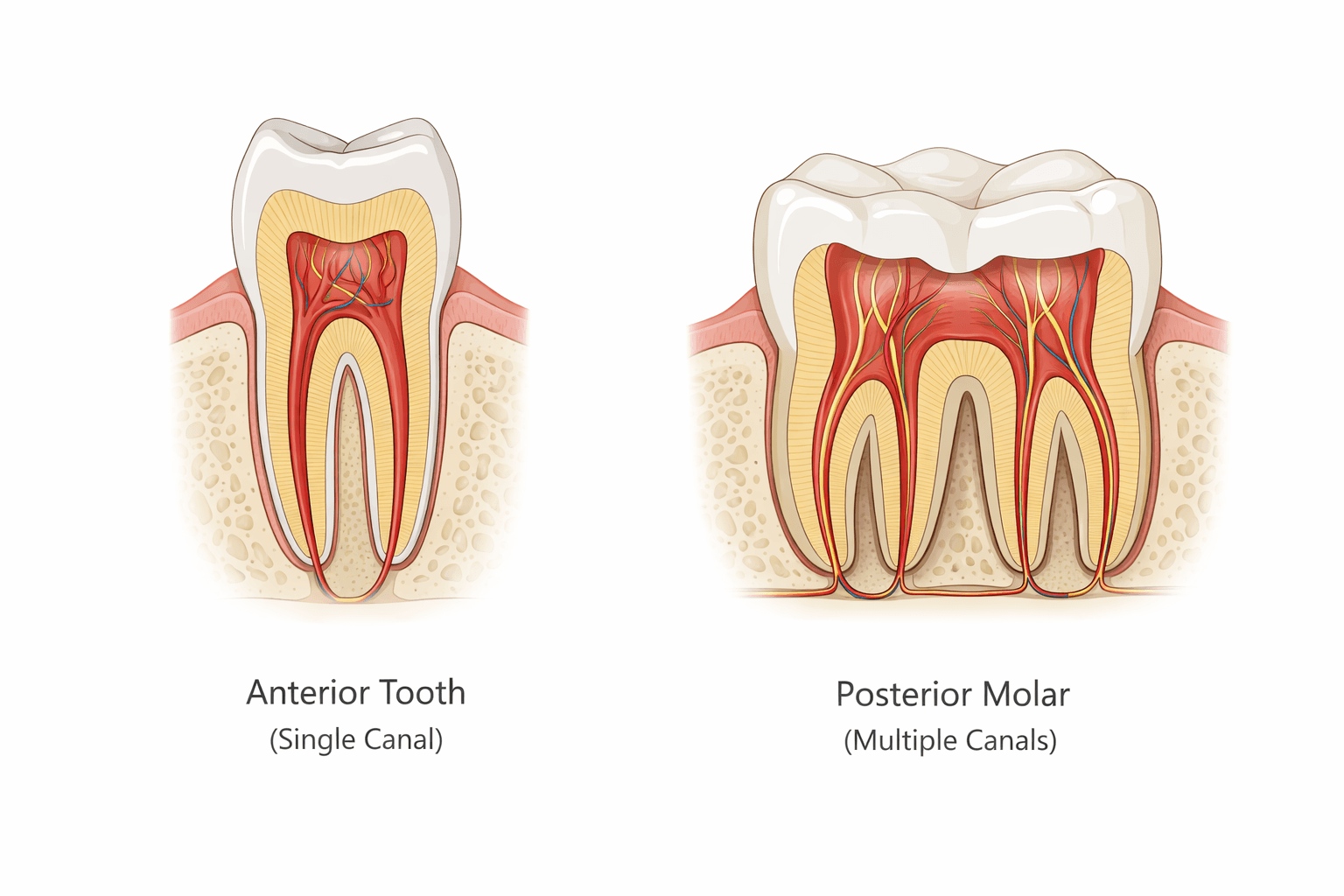
Front teeth typically have fewer canals and simpler anatomy. Treatment is often more straightforward, with fewer steps involved.
Posterior Teeth (Back Teeth)
Molars and premolars have multiple canals and more complex root structures. These cases require additional time, precision, and careful cleaning to ensure all infected tissue is removed.
The treatment plan is adjusted accordingly, and this complexity is explained upfront so expectations are clear.
Step-by-Step: How Root Canal Treatment Is Performed
Root canal treatment at KSV Dental follows a structured process designed to be efficient, controlled, and predictable.
Diagnosis & Imaging
X-rays are used to assess the extent of infection and root anatomy. This step is critical for planning and avoiding unnecessary repeat visits.Anesthesia & Isolation
Local anesthesia is administered to ensure comfort. The tooth is isolated to maintain a clean working field.Cleaning & Disinfection
Infected pulp is removed, and the canals are carefully cleaned and disinfected to eliminate bacteria.Canal Shaping & Sealing
The cleaned canals are shaped and sealed to prevent reinfection.Restoration Planning
Depending on the tooth, a filling or crown may be recommended to restore strength and function.Each step is explained clearly, and treatment is paced appropriately — not rushed.

Root Canal Redo: When Previous Treatment Needs Correction
In some cases, a tooth that has undergone root canal treatment elsewhere may develop symptoms again. This does not necessarily mean the tooth cannot be saved.
Root canal redo procedures are considered when:
Infection was not fully resolved
Canal anatomy was missed or inaccessible previously
Leakage occurred due to restoration failure
These cases are less common but handled with careful reassessment and realistic discussion. If redo treatment is predictable, it is offered. If not, alternatives are explained honestly.
Apicectomy Surgery: A Targeted Surgical Option
When conventional root canal or redo treatment cannot fully address the infection, an apicectomy may be considered.
This minor surgical procedure removes the infected tip of the root while preserving the rest of the tooth. It is used selectively and only when it improves the likelihood of long-term success.
Apicectomy is not routine — it is an option reserved for specific, well-defined situations.
Managing Pain and Recovery After Treatment
One of the most common concerns is pain after the procedure.
Most patients experience mild tenderness for a short period as the surrounding tissue heals. This is usually manageable and temporary. Post-treatment discomfort is explained in advance, along with clear aftercare instructions.
Root canal treatment is intended to eliminate ongoing pain, not replace it with something worse.
Treatment Timeline: Avoiding Unnecessary Visits
Another concern is drawn-out treatment.
Whenever possible, treatment is planned efficiently to reduce the number of visits without compromising quality. The exact timeline depends on:
Tooth position
Infection severity
Individual healing response
Patients are informed upfront if a case requires multiple stages, so there are no surprises mid-treatment.
Cost Considerations: Explained Logically
Root canal costs vary based on tooth complexity. Front teeth generally require less time and fewer resources than back teeth.
Rather than presenting a single flat explanation, KSC Dental explains why costs differ — so patients understand what they are paying for and why it matters.
A Conservative, Tooth-Preserving Philosophy
KSC Dental prioritizes saving the natural tooth whenever it is predictable and responsible to do so. Root canal treatment is not offered as a default, but as a considered option when it provides the best long-term outcome.
If extraction is the more reliable solution, that conversation happens honestly.
When Pain Needs to Be Addressed Now
If you’re experiencing persistent tooth pain, waiting often makes treatment more complex — not simpler.
Root canal treatment is not about enduring discomfort. It’s about resolving the cause and restoring stability.
At KSV Dental, the focus is clear diagnosis, controlled treatment, and outcomes you can rely on — especially when the case is not straightforward.
If you’re in pain, the next step is not guessing.
It’s getting a clear answer.
Understanding the Problem Inside the Tooth
Inside every tooth is a small chamber containing nerves and blood vessels, known as the pulp. When this tissue becomes infected — due to deep decay, cracks, trauma, or repeated dental work — the infection cannot heal on its own.
If left untreated, it can lead to:
Increasing pain and sensitivity
Swelling or abscess formation
Spread of infection to surrounding bone
Eventual tooth loss
Root canal treatment addresses the issue at its source, rather than masking symptoms.
Pulp Devitalization: Stabilizing Acute Pain
In cases of severe or acute pain, pulp devitalization may be used as an initial step. This process reduces nerve activity within the tooth, helping to stabilize symptoms and make further treatment more manageable.
This is not a shortcut or temporary fix, but a controlled step within a structured treatment plan, especially useful when inflammation is high.
Root Canal Treatment (Anterior & Posterior Teeth)
Root canal procedures differ depending on tooth position and structure.
Anterior Teeth (Front Teeth)
Front teeth typically have fewer canals and simpler anatomy. Treatment is often more straightforward, with fewer steps involved.
Posterior Teeth (Back Teeth)
Molars and premolars have multiple canals and more complex root structures. These cases require additional time, precision, and careful cleaning to ensure all infected tissue is removed.
The treatment plan is adjusted accordingly, and this complexity is explained upfront so expectations are clear.
Step-by-Step: How Root Canal Treatment Is Performed
Root canal treatment at KSV Dental follows a structured process designed to be efficient, controlled, and predictable.
Diagnosis & Imaging
X-rays are used to assess the extent of infection and root anatomy. This step is critical for planning and avoiding unnecessary repeat visits.Anesthesia & Isolation
Local anesthesia is administered to ensure comfort. The tooth is isolated to maintain a clean working field.Cleaning & Disinfection
Infected pulp is removed, and the canals are carefully cleaned and disinfected to eliminate bacteria.Canal Shaping & Sealing
The cleaned canals are shaped and sealed to prevent reinfection.Restoration Planning
Depending on the tooth, a filling or crown may be recommended to restore strength and function.Each step is explained clearly, and treatment is paced appropriately — not rushed.
Root Canal Redo: When Previous Treatment Needs Correction
In some cases, a tooth that has undergone root canal treatment elsewhere may develop symptoms again. This does not necessarily mean the tooth cannot be saved.
Root canal redo procedures are considered when:
Infection was not fully resolved
Canal anatomy was missed or inaccessible previously
Leakage occurred due to restoration failure
These cases are less common but handled with careful reassessment and realistic discussion. If redo treatment is predictable, it is offered. If not, alternatives are explained honestly.
Apicectomy Surgery: A Targeted Surgical Option
When conventional root canal or redo treatment cannot fully address the infection, an apicectomy may be considered.
This minor surgical procedure removes the infected tip of the root while preserving the rest of the tooth. It is used selectively and only when it improves the likelihood of long-term success.
Apicectomy is not routine — it is an option reserved for specific, well-defined situations.
Managing Pain and Recovery After Treatment
One of the most common concerns is pain after the procedure.
Most patients experience mild tenderness for a short period as the surrounding tissue heals. This is usually manageable and temporary. Post-treatment discomfort is explained in advance, along with clear aftercare instructions.
Root canal treatment is intended to eliminate ongoing pain, not replace it with something worse.
Treatment Timeline: Avoiding Unnecessary Visits
Another concern is drawn-out treatment.
Whenever possible, treatment is planned efficiently to reduce the number of visits without compromising quality. The exact timeline depends on:
Tooth position
Infection severity
Individual healing response
Patients are informed upfront if a case requires multiple stages, so there are no surprises mid-treatment.
Cost Considerations: Explained Logically
Root canal costs vary based on tooth complexity. Front teeth generally require less time and fewer resources than back teeth.
Rather than presenting a single flat explanation, KSC Dental explains why costs differ — so patients understand what they are paying for and why it matters.
A Conservative, Tooth-Preserving Philosophy
KSC Dental prioritizes saving the natural tooth whenever it is predictable and responsible to do so. Root canal treatment is not offered as a default, but as a considered option when it provides the best long-term outcome.
If extraction is the more reliable solution, that conversation happens honestly.
When Pain Needs to Be Addressed Now
If you’re experiencing persistent tooth pain, waiting often makes treatment more complex — not simpler.
Root canal treatment is not about enduring discomfort. It’s about resolving the cause and restoring stability.
At KSV Dental, the focus is clear diagnosis, controlled treatment, and outcomes you can rely on — especially when the case is not straightforward.
If you’re in pain, the next step is not guessing.
It’s getting a clear answer.
More Service
More Service
Other specific dental treatments we offer
Other specific dental treatments we offer


Opening Hours
Monday - Friday
08:30AM - 12:00PM, 01:00PM - 6:00PM
Saturday
08:00AM - 12:00PM, 01:00PM - 6:00PM
Sunday
08:00AM - 02:00PM
Service Location
Opening Hours
Monday - Friday
08:30AM - 12:00PM, 01:00PM - 6:00PM
Saturday
08:00AM - 12:00PM, 01:00PM - 6:00PM
Sunday
08:00AM - 02:00PM
Service Location
Opening Hours
Monday - Friday
08:30AM - 12:00PM, 01:00PM - 6:00PM
Saturday
08:00AM - 12:00PM, 01:00PM - 6:00PM
Sunday
08:00AM - 02:00PM
Service Location