
Orthodontics
Orthodontics is not just about straight teeth. Done properly, it’s about aligning the bite, improving long-term oral health, and achieving a natural-looking smile without unnecessary treatment or wasted expense. At KSV Dental clinic, orthodontic care is approached as a measured, case-by-case process — not a one-size-fits-all package. Every plan is designed to solve a specific problem, using only the tools required for that case. Nothing more. For adults, orthodontics can correct crowding, spacing, or bite issues that have worsened over time. For children and teens, early intervention can guide proper jaw development and reduce the need for more complex treatment later. In all cases, the goal is the same: predictable progress, clear decisions, and results that look right — not overdone.
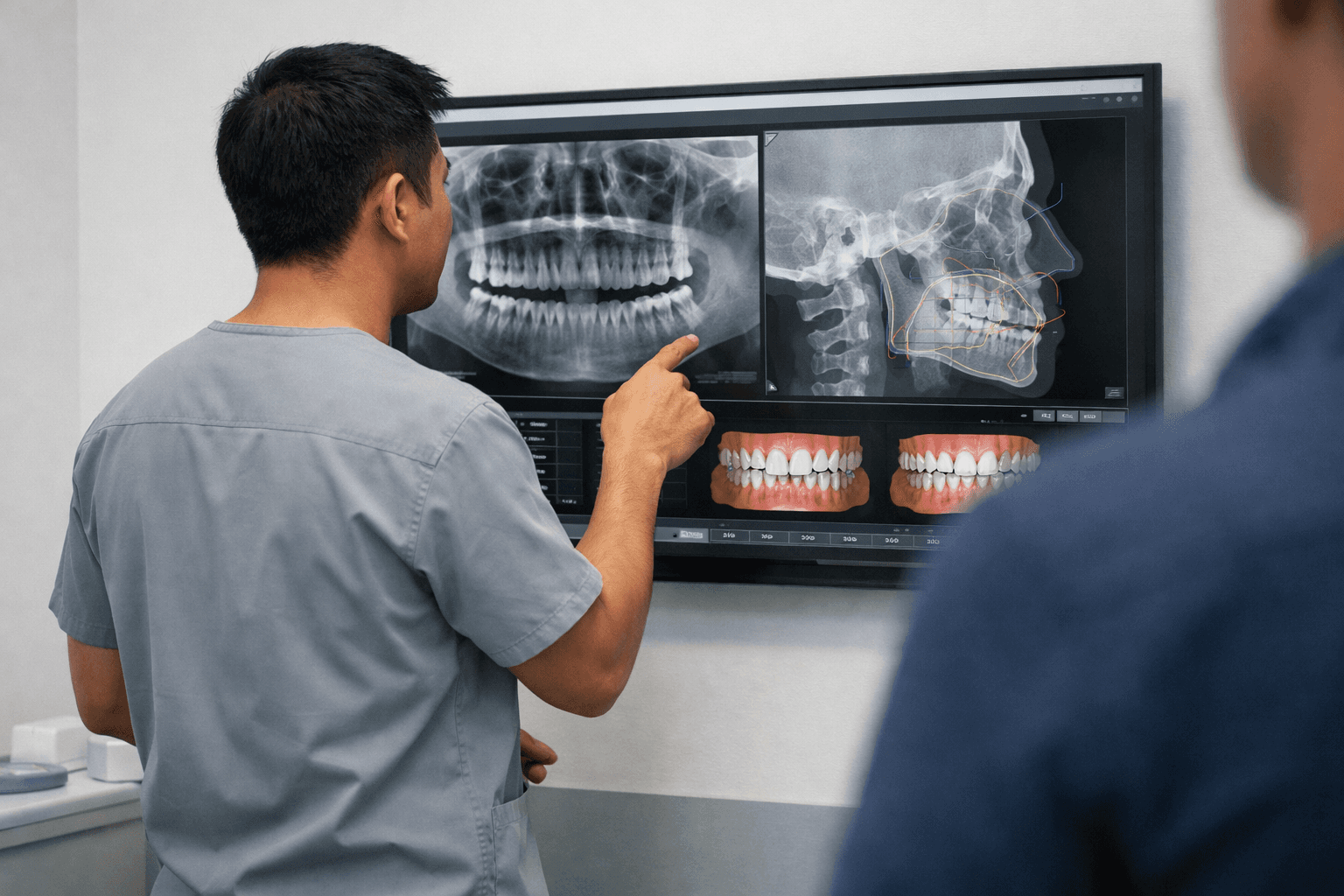
Consultation & Case Analysis: Decisions Before Devices
Orthodontic treatment always begins with understanding the problem properly.
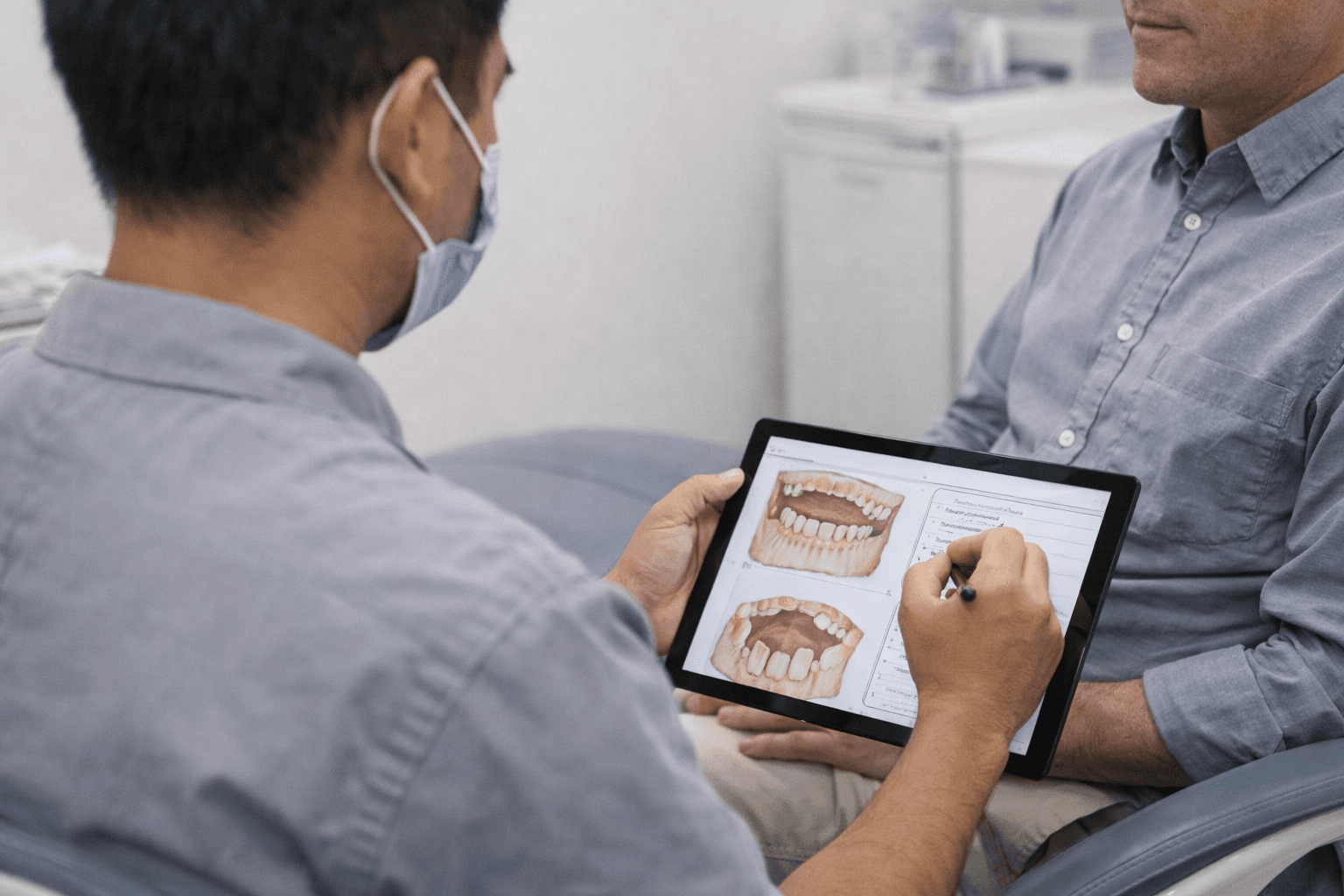
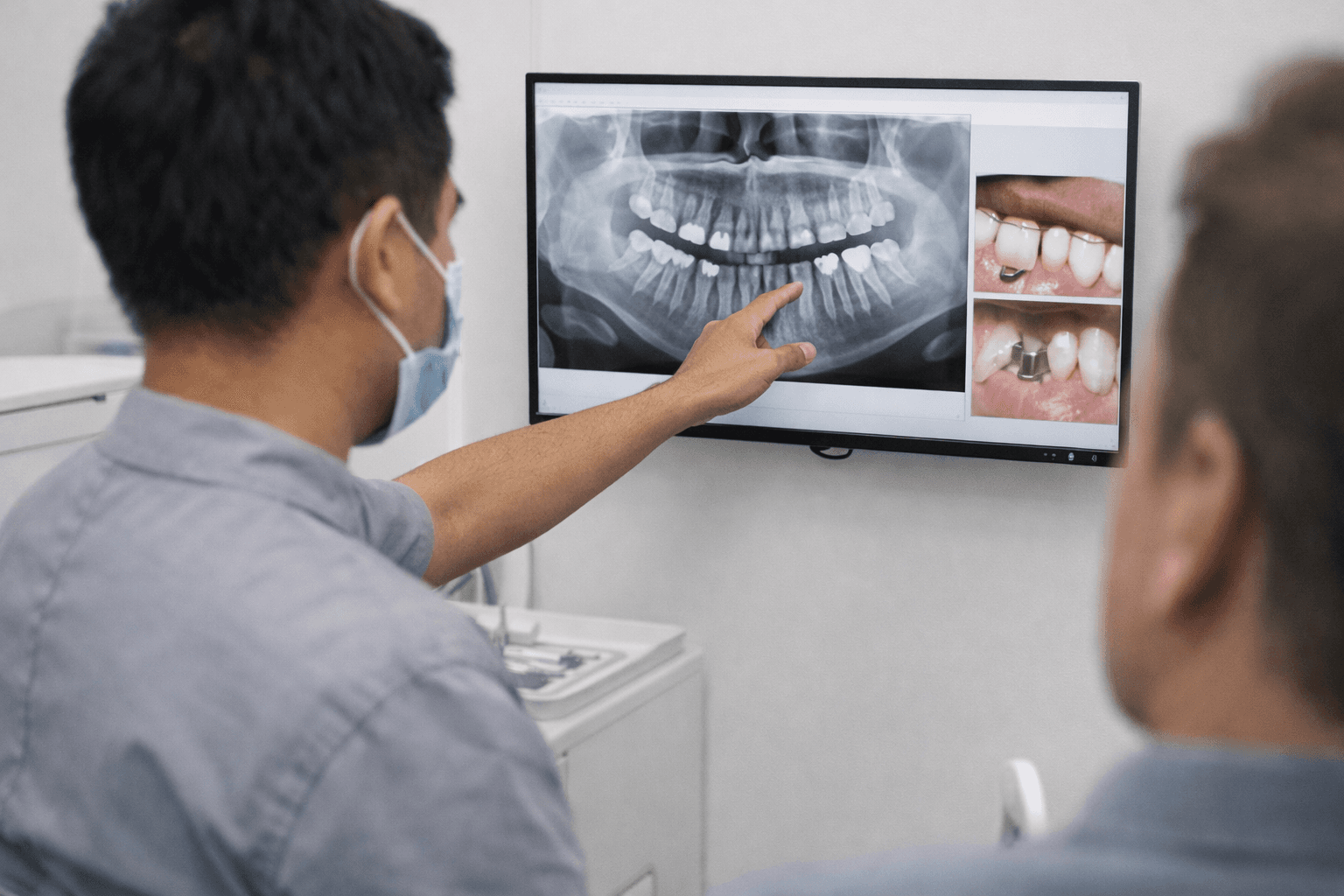
A consultation includes a clinical examination, X-rays or scans if required, and a structured case analysis. This allows the orthodontist to assess tooth position, bite alignment, jaw balance, and growth patterns (especially important for younger patients).
You’ll be walked through:
What needs to be corrected
What does not need to be corrected
The realistic treatment options available
Expected timeline and stages
Clear cost differences between approaches
If orthodontic treatment isn’t necessary, it will be said plainly. If a simpler solution is enough, that’s what will be recommended.
Bracket Options: Choosing the Right Tool for the Job
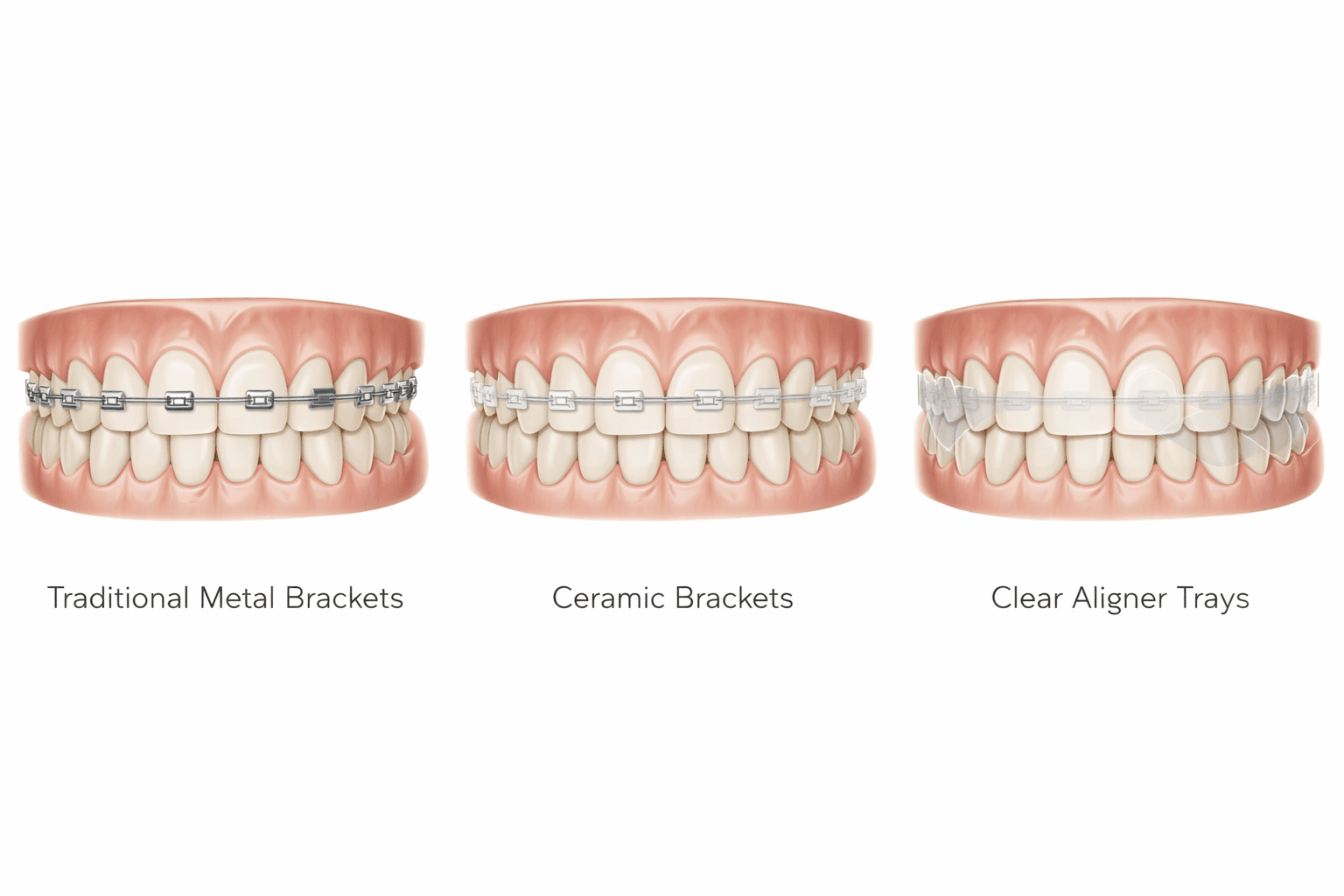
Different cases require different systems. The clinic offers multiple orthodontic options to match clinical needs, aesthetic preferences, and budget levels.
Ceramic Brackets
Ceramic brackets are designed to blend more naturally with the teeth. They are a popular choice for patients who want a less noticeable option while still benefiting from a fixed orthodontic system. Performance is comparable to metal brackets in many cases.
Metal Brackets
Metal brackets remain one of the most effective and predictable orthodontic tools. They are durable, efficient, and often the most cost-effective option — especially for more complex alignment or bite correction.
Clear Aligners (Including Invisalign)
Clear aligners are removable trays used to gradually move teeth. They are discreet and convenient for certain cases, particularly mild to moderate alignment issues. They are presented as one option among many, not a default solution.
Each option is explained clearly, including where it works well — and where it doesn’t.
Retainers: Protecting the Result You Paid For
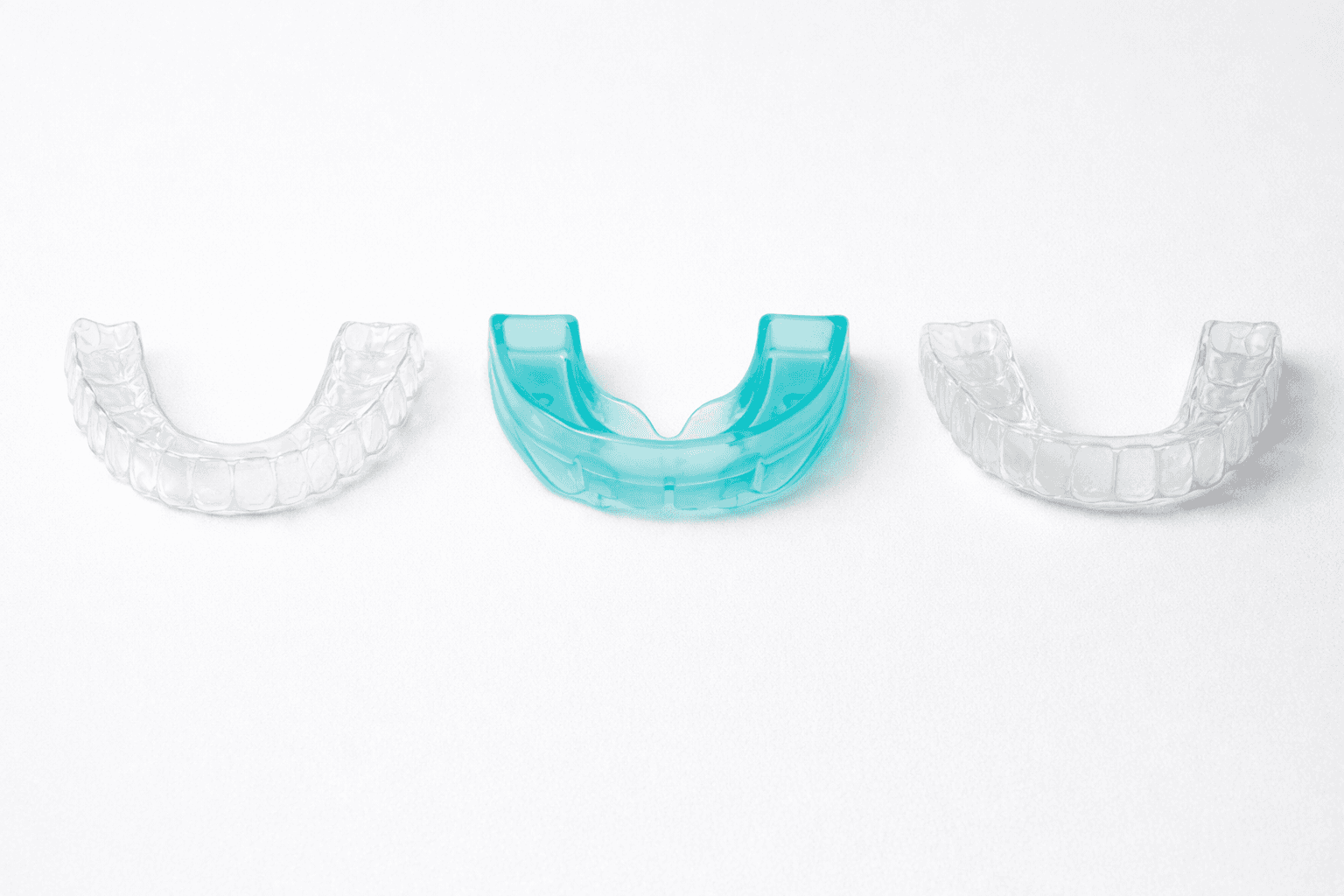
Orthodontic treatment doesn’t end when the braces come off or the final aligner is worn.
Retainers are used to stabilize teeth after active treatment and prevent unwanted movement. The type of retainer and duration of use are determined based on the original case and long-term stability needs.
Skipping this step is one of the most common reasons patients lose results. It’s treated as part of the plan — not an afterthought.
Orthodontic Trainer for Kids: Early Guidance, Not Early Braces
For younger patients, orthodontics doesn’t always mean braces.
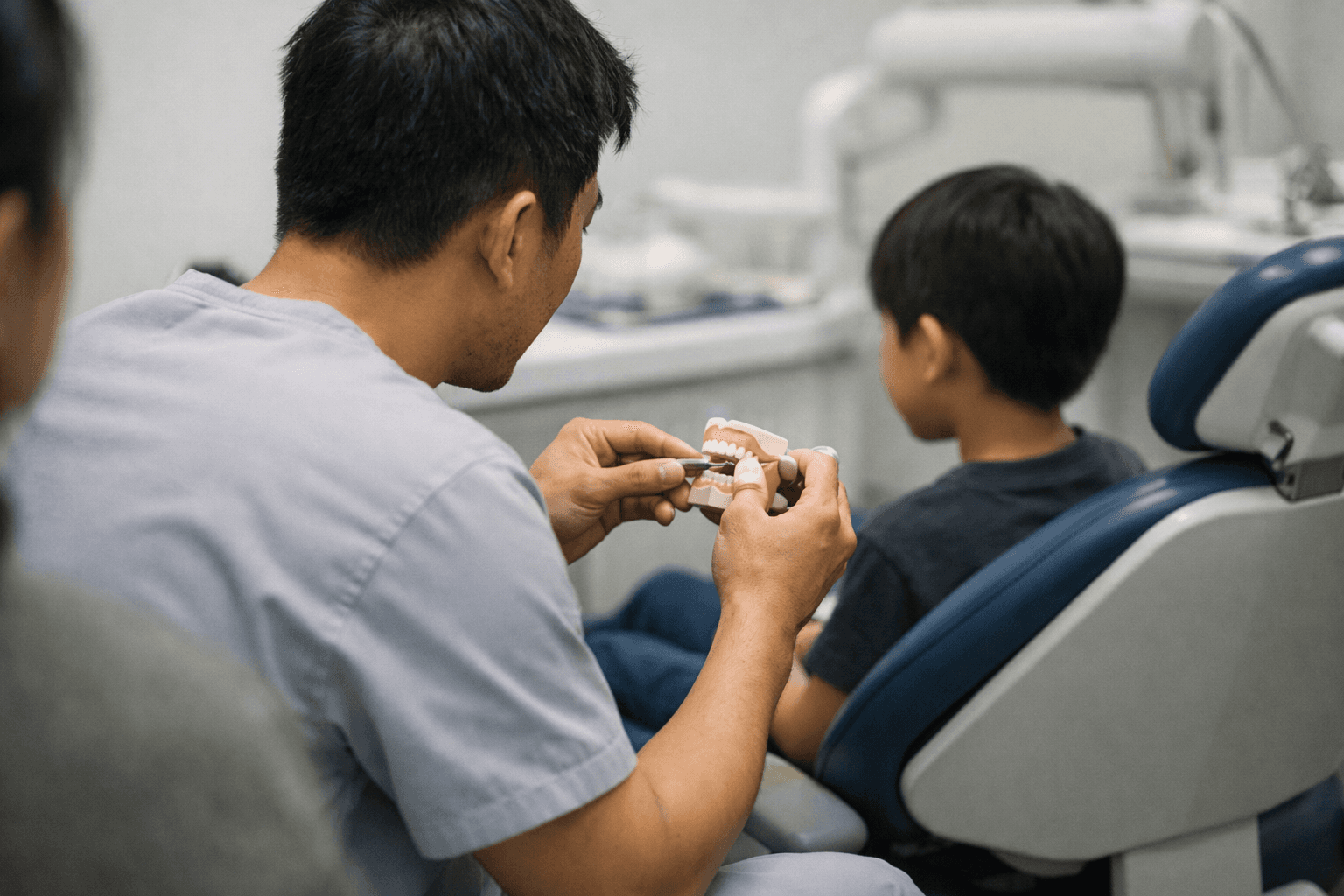
Orthodontic trainers can be used to guide jaw development, improve oral habits, and create space for proper tooth eruption. This preventive approach can reduce treatment time, complexity, or cost later on.
Parents are advised honestly on whether early intervention is beneficial — or if monitoring is the better choice.
Acrylic Night Guard: Supporting Alignment & Protecting Teeth
In some cases, bite issues, grinding, or jaw tension can interfere with orthodontic outcomes.
An acrylic night guard may be recommended to protect teeth, reduce stress on the jaw, and support overall treatment stability. As with all services here, it’s only suggested when it adds real value to the outcome.
What the Orthodontic Process Actually Looks Like
Orthodontic treatment at KSV Dental follows a structured, predictable process. No rushed decisions. No surprises halfway through.
Step 1: Assessment & Treatment Planning
Every case begins with a full orthodontic assessment. This includes a clinical exam and imaging where needed to understand tooth position, bite alignment, and jaw balance.
From there, a clear treatment plan is created:
What needs to move
How it will be moved
Which system makes the most sense
What can be left alone
You’ll see the logic behind the recommendation before anything starts.
Step 2: System Selection & Cost Transparency
Once the plan is confirmed, the orthodontist will explain the suitable options — metal brackets, ceramic brackets, or clear aligners — including why one may be more appropriate than another.
Costs are explained upfront.
If there are lower- or higher-cost alternatives, you’ll understand the trade-offs clearly before deciding.
No upgrades. No pressure.
Step 3: Active Treatment Phase
Braces or aligners are placed according to the plan. Adjustments are scheduled at appropriate intervals to guide tooth movement gradually and safely.
Most patients begin to see visible improvement early, even though full correction takes longer. Progress is monitored closely to keep treatment on track and avoid unnecessary extensions.
Step 4: Retention & Long-Term Stability
Once alignment is complete, retainers are used to protect the result. This step is critical — and clearly explained — so your time and investment aren’t wasted.
The goal isn’t just straight teeth today, but stable results that last.
Orthodontic Timeline: What to Expect
Orthodontic timelines vary by case, but most treatments follow a predictable range.
Mild alignment issues: several months
Moderate cases: around 12–18 months
More complex cases: longer, with phased progress
For children, early orthodontic trainers may shorten or simplify future treatment.
From the beginning, KSV Dental focuses on:
Realistic timelines
Early visible progress
Avoiding overtreatment
You’ll know what phase you’re in — and what comes next.
Why Patients Choose KSV Dental for Orthodontics
Plenty of clinics offer braces. Very few explain why you need them — or when you don’t.
Here’s where KSV Dental is different.
Dedicated Orthodontic Oversight
Orthodontic cases are managed by a dedicated orthodontist, not treated as a side service. Complex decisions are made deliberately, not rushed.
Conservative, Case-Based Decisions
Treatment is recommended only when it adds value.
If a simpler approach works, that’s what’s chosen.
If monitoring is better than intervention, that’s said clearly.
This protects patients from unnecessary cost and unnecessary treatment.
Clear Communication, Especially for Parents
Parents are guided through the “why,” not just the “what.”
What’s urgent. What can wait. What actually makes a difference long-term.
No scare tactics. No vague reassurances.
Experience Across Ages & Needs
From preventive care for children to aesthetic alignment for adults, KSV Dental handles a wide range of orthodontic cases — allowing plans to be tailored instead of templated.
Trust Built Over Time, Not Marketing
With over 25 years of operation, KSV Dental has built its reputation through outcomes and patient experience — not aggressive promotion.
Before-and-after results are shared where appropriate, helping patients understand realistic outcomes without exaggerated promises.
A Smarter Way to Approach Orthodontics
Orthodontic treatment should feel structured, explained, and justified — not confusing or sales-driven.
At KSV Dental, the focus is simple:
Treat what needs treating
Explain every decision
Respect your time and budget
Deliver results that look natural
If you’re considering orthodontic care for yourself or your child, the next step isn’t choosing braces. It’s choosing a clinic that knows when to use them — and when not to.
Consultation & Case Analysis: Decisions Before Devices
Orthodontic treatment always begins with understanding the problem properly.
A consultation includes a clinical examination, X-rays or scans if required, and a structured case analysis. This allows the orthodontist to assess tooth position, bite alignment, jaw balance, and growth patterns (especially important for younger patients).
You’ll be walked through:
What needs to be corrected
What does not need to be corrected
The realistic treatment options available
Expected timeline and stages
Clear cost differences between approaches
If orthodontic treatment isn’t necessary, it will be said plainly. If a simpler solution is enough, that’s what will be recommended.
Bracket Options: Choosing the Right Tool for the Job
Different cases require different systems. The clinic offers multiple orthodontic options to match clinical needs, aesthetic preferences, and budget levels.
Ceramic Brackets
Ceramic brackets are designed to blend more naturally with the teeth. They are a popular choice for patients who want a less noticeable option while still benefiting from a fixed orthodontic system. Performance is comparable to metal brackets in many cases.
Metal Brackets
Metal brackets remain one of the most effective and predictable orthodontic tools. They are durable, efficient, and often the most cost-effective option — especially for more complex alignment or bite correction.
Clear Aligners (Including Invisalign)
Clear aligners are removable trays used to gradually move teeth. They are discreet and convenient for certain cases, particularly mild to moderate alignment issues. They are presented as one option among many, not a default solution.
Each option is explained clearly, including where it works well — and where it doesn’t.
Retainers: Protecting the Result You Paid For
Orthodontic treatment doesn’t end when the braces come off or the final aligner is worn.
Retainers are used to stabilize teeth after active treatment and prevent unwanted movement. The type of retainer and duration of use are determined based on the original case and long-term stability needs.
Skipping this step is one of the most common reasons patients lose results. It’s treated as part of the plan — not an afterthought.
Orthodontic Trainer for Kids: Early Guidance, Not Early Braces
For younger patients, orthodontics doesn’t always mean braces.
Orthodontic trainers can be used to guide jaw development, improve oral habits, and create space for proper tooth eruption. This preventive approach can reduce treatment time, complexity, or cost later on.
Parents are advised honestly on whether early intervention is beneficial — or if monitoring is the better choice.
Acrylic Night Guard: Supporting Alignment & Protecting Teeth
In some cases, bite issues, grinding, or jaw tension can interfere with orthodontic outcomes.
An acrylic night guard may be recommended to protect teeth, reduce stress on the jaw, and support overall treatment stability. As with all services here, it’s only suggested when it adds real value to the outcome.
What the Orthodontic Process Actually Looks Like
Orthodontic treatment at KSV Dental follows a structured, predictable process. No rushed decisions. No surprises halfway through.
Step 1: Assessment & Treatment Planning
Every case begins with a full orthodontic assessment. This includes a clinical exam and imaging where needed to understand tooth position, bite alignment, and jaw balance.
From there, a clear treatment plan is created:
What needs to move
How it will be moved
Which system makes the most sense
What can be left alone
You’ll see the logic behind the recommendation before anything starts.
Step 2: System Selection & Cost Transparency
Once the plan is confirmed, the orthodontist will explain the suitable options — metal brackets, ceramic brackets, or clear aligners — including why one may be more appropriate than another.
Costs are explained upfront.
If there are lower- or higher-cost alternatives, you’ll understand the trade-offs clearly before deciding.
No upgrades. No pressure.
Step 3: Active Treatment Phase
Braces or aligners are placed according to the plan. Adjustments are scheduled at appropriate intervals to guide tooth movement gradually and safely.
Most patients begin to see visible improvement early, even though full correction takes longer. Progress is monitored closely to keep treatment on track and avoid unnecessary extensions.
Step 4: Retention & Long-Term Stability
Once alignment is complete, retainers are used to protect the result. This step is critical — and clearly explained — so your time and investment aren’t wasted.
The goal isn’t just straight teeth today, but stable results that last.
Orthodontic Timeline: What to Expect
Orthodontic timelines vary by case, but most treatments follow a predictable range.
Mild alignment issues: several months
Moderate cases: around 12–18 months
More complex cases: longer, with phased progress
For children, early orthodontic trainers may shorten or simplify future treatment.
From the beginning, KSV Dental focuses on:
Realistic timelines
Early visible progress
Avoiding overtreatment
You’ll know what phase you’re in — and what comes next.
Why Patients Choose KSV Dental for Orthodontics
Plenty of clinics offer braces. Very few explain why you need them — or when you don’t.
Here’s where KSV Dental is different.
Dedicated Orthodontic Oversight
Orthodontic cases are managed by a dedicated orthodontist, not treated as a side service. Complex decisions are made deliberately, not rushed.
Conservative, Case-Based Decisions
Treatment is recommended only when it adds value.
If a simpler approach works, that’s what’s chosen.
If monitoring is better than intervention, that’s said clearly.
This protects patients from unnecessary cost and unnecessary treatment.
Clear Communication, Especially for Parents
Parents are guided through the “why,” not just the “what.”
What’s urgent. What can wait. What actually makes a difference long-term.
No scare tactics. No vague reassurances.
Experience Across Ages & Needs
From preventive care for children to aesthetic alignment for adults, KSV Dental handles a wide range of orthodontic cases — allowing plans to be tailored instead of templated.
Trust Built Over Time, Not Marketing
With over 25 years of operation, KSV Dental has built its reputation through outcomes and patient experience — not aggressive promotion.
Before-and-after results are shared where appropriate, helping patients understand realistic outcomes without exaggerated promises.
A Smarter Way to Approach Orthodontics
Orthodontic treatment should feel structured, explained, and justified — not confusing or sales-driven.
At KSV Dental, the focus is simple:
Treat what needs treating
Explain every decision
Respect your time and budget
Deliver results that look natural
If you’re considering orthodontic care for yourself or your child, the next step isn’t choosing braces. It’s choosing a clinic that knows when to use them — and when not to.
More Service
More Service
Other specific dental treatments we offer
Other specific dental treatments we offer
Opening Hours
Monday - Friday
08:30AM - 12:00PM, 01:00PM - 6:00PM
Saturday
08:00AM - 12:00PM, 01:00PM - 6:00PM
Sunday
08:00AM - 02:00PM
Service Location
Opening Hours
Monday - Friday
08:30AM - 12:00PM, 01:00PM - 6:00PM
Saturday
08:00AM - 12:00PM, 01:00PM - 6:00PM
Sunday
08:00AM - 02:00PM
Service Location
Opening Hours
Monday - Friday
08:30AM - 12:00PM, 01:00PM - 6:00PM
Saturday
08:00AM - 12:00PM, 01:00PM - 6:00PM
Sunday
08:00AM - 02:00PM
Service Location