
Periodontal
Gum problems often progress quietly. Bleeding during brushing, persistent bad breath, or gum recession are easy to ignore — until teeth begin to feel loose or sensitive and treatment becomes more complex. Periodontology focuses on the health of the gums and the bone that support your teeth. When this foundation is compromised, even otherwise healthy teeth are at risk. At KSV Dental, periodontal treatment is approached conservatively, in stages, and based on severity — with the goal of stopping progression early and preserving what can be saved. The priority is not aggressive intervention, but timely, appropriate care before damage becomes irreversible.
Understanding Gum Disease and Why It Matters
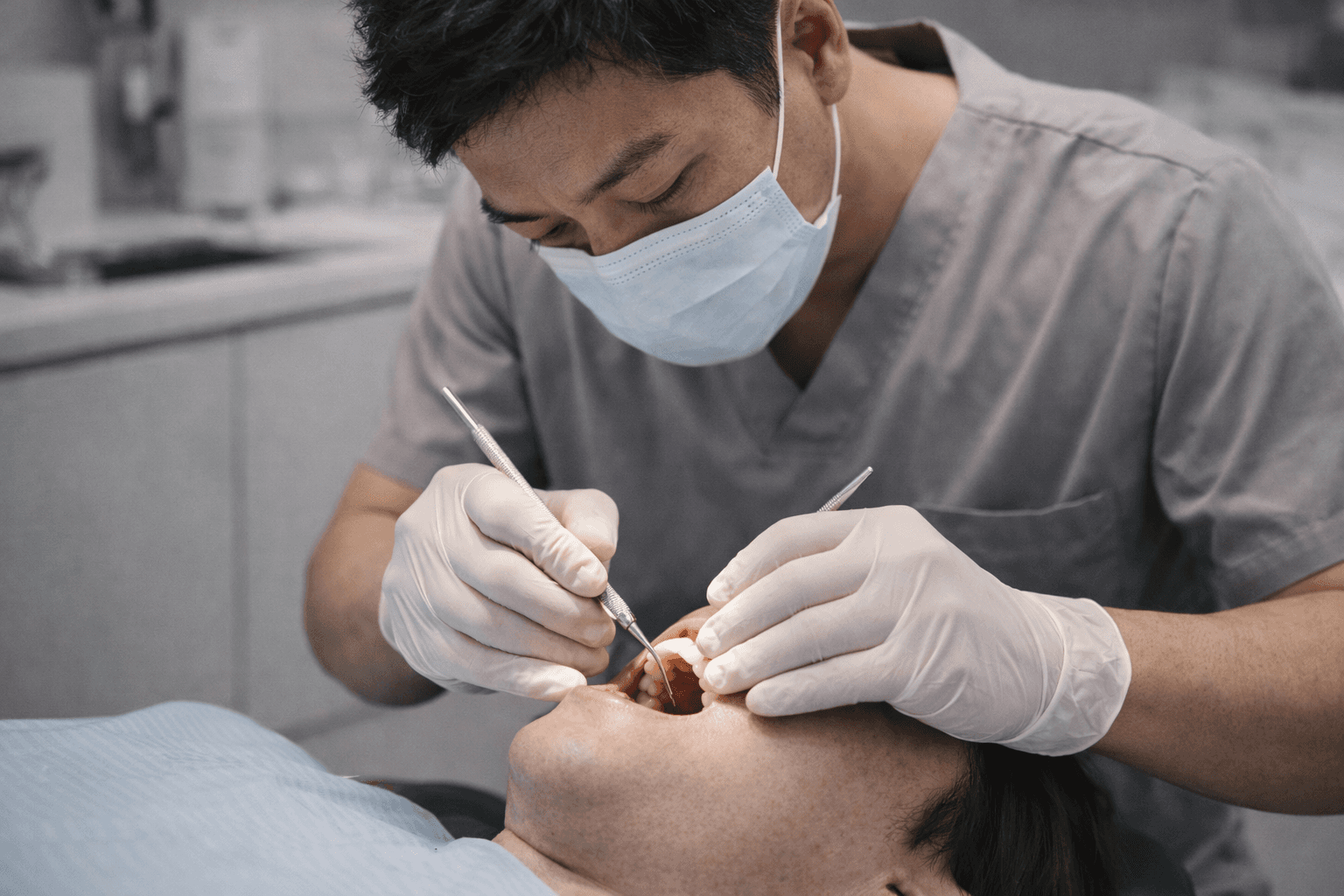
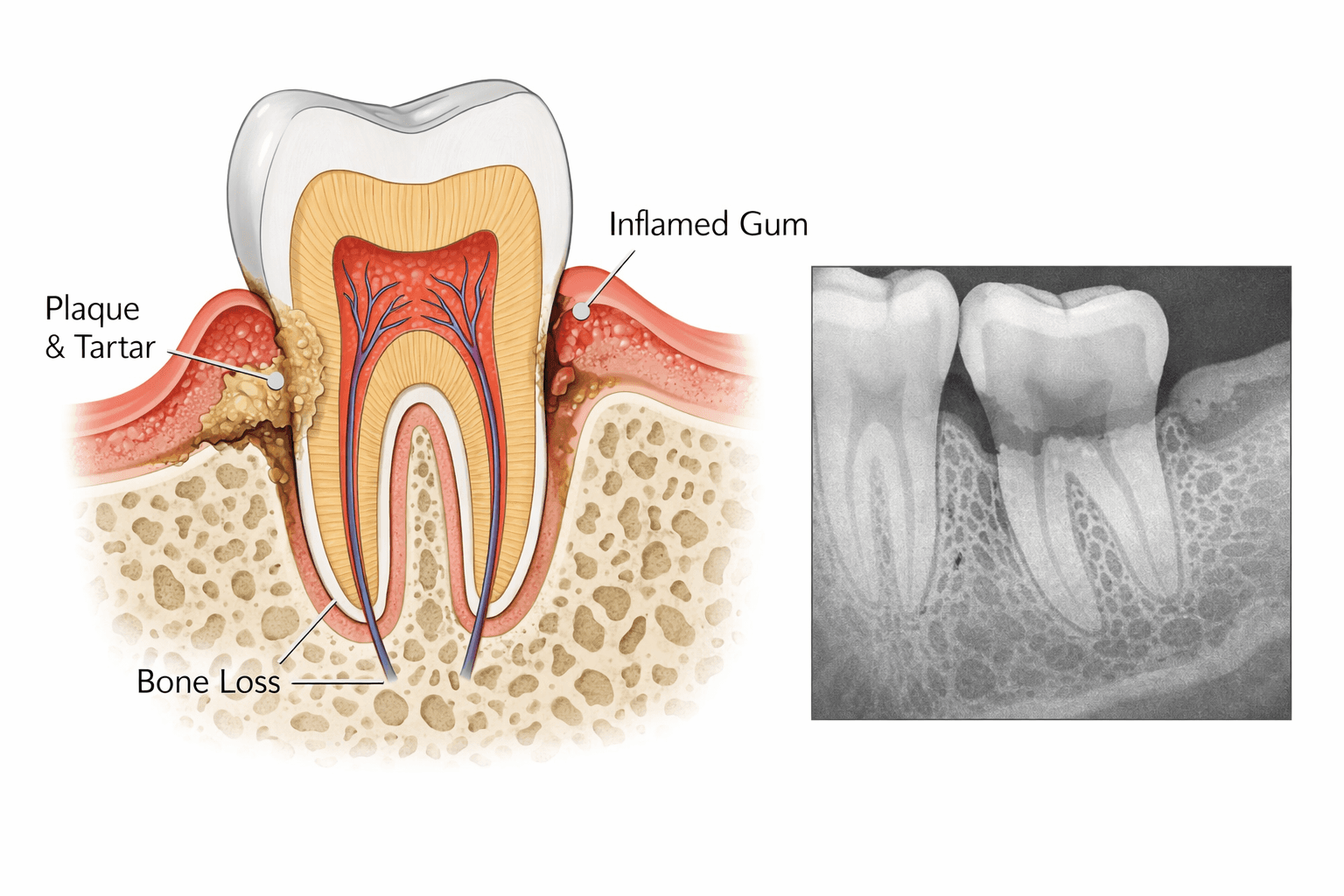
Gum disease develops when plaque and bacteria accumulate below the gum line. Over time, this can lead to inflammation, infection, and gradual loss of supporting bone.
Left untreated, periodontal disease may result in:
Ongoing gum inflammation and bleeding
Gum recession and tooth sensitivity
Bone loss around teeth
Eventual tooth mobility or loss
Because symptoms often advance slowly, many patients are surprised by the extent of the problem when it’s first identified. This is why clear explanation and proper assessment are critical.
Scaling: Addressing Buildup at the Surface
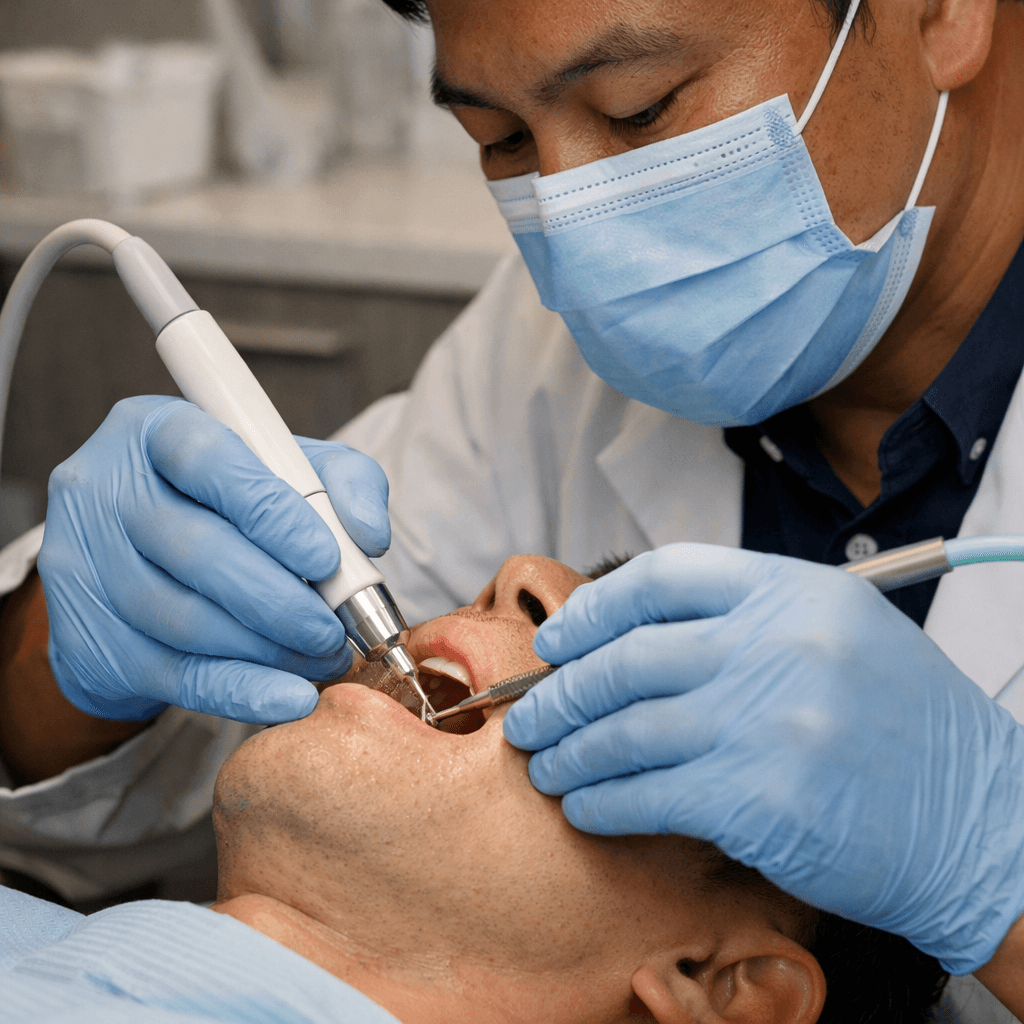
Scaling is the removal of plaque and hardened deposits (tartar) from the tooth surface and along the gum line. This is often sufficient for early-stage gum issues.
Routine scaling helps:
Reduce inflammation
Improve gum health
Prevent progression to deeper infection
For some patients, regular scaling combined with good home care is all that’s needed.
Deep Scaling: When Bacteria Extend Below the Gums
When deposits extend deeper beneath the gum line, standard scaling alone is no longer effective. Deep scaling targets these areas more thoroughly, removing bacteria that contribute to ongoing inflammation.
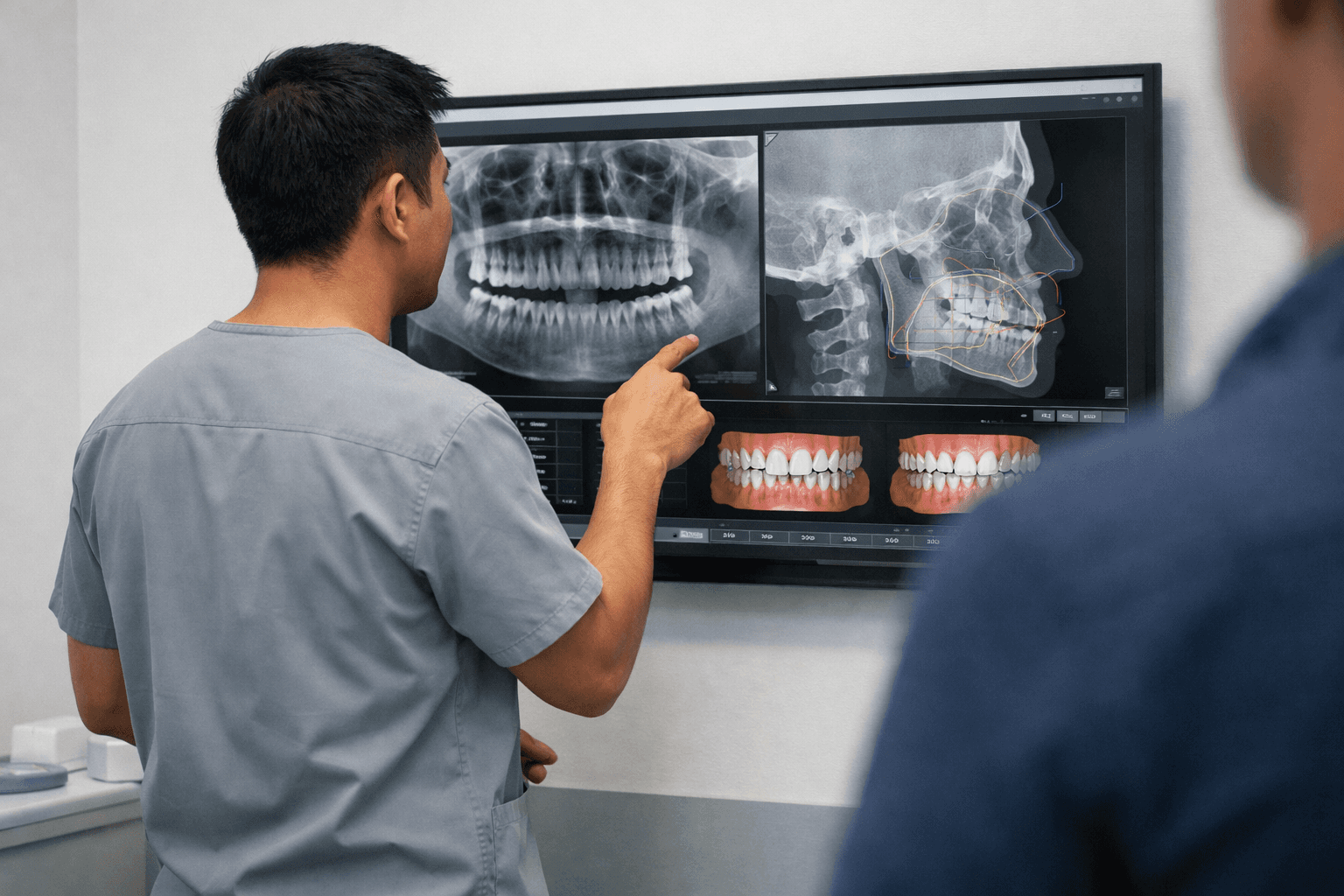
This is not recommended lightly. Deep scaling is suggested only when examination and imaging show that deeper pockets are present and surface cleaning is insufficient.
The aim is to reduce bacterial load and allow the gums to reattach more effectively.
Root Planing: Smoothing the Surface for Healing
Root planing is often performed alongside deep scaling. It smooths the root surfaces of the teeth so bacteria are less likely to adhere and the gums can heal more predictably.
Quarter-Mouth Root Planing
In some cases, treatment is done in sections, focusing on the most affected areas first. This staged approach allows response to treatment to be evaluated before proceeding further.
Full-Mouth Root Planing
When gum disease is more widespread, full-mouth treatment may be recommended. This is planned carefully and explained clearly before starting.
The scope of treatment is always case-dependent, based on severity and response.
What Treatment Feels Like and How Comfort Is Managed
Pain is a common concern with periodontal treatment.
Local anesthesia is used when needed to ensure comfort during deep cleaning procedures. The goal is not to “push through” discomfort, but to allow treatment to be performed properly and calmly.
After treatment, some tenderness or sensitivity is normal and temporary. Clear aftercare guidance is provided so patients know what to expect and how to manage recovery.
Treatment in Stages, With Reassessment
Periodontal care at KSV Dental is not rushed.
Treatment is often carried out in stages, followed by reassessment to evaluate healing and response. This prevents unnecessary procedures and ensures that each step is justified before moving on.
If improvement is seen, treatment may stop there.
If further care is needed, it’s discussed clearly — with reasons explained.
A Conservative Philosophy Focused on Preservation
KSV Dental treats gum disease with one guiding principle: intervene only as much as necessary to protect long-term oral health.
Not every patient with gum issues needs extensive treatment. Not every case requires full-mouth intervention. Decisions are based on clinical findings — not assumptions.
This conservative approach helps patients avoid overtreatment while addressing real risk early.
Why Acting Early Makes a Difference
Gum disease does not resolve on its own. When addressed early, treatment is simpler, more predictable, and less disruptive.
When delayed, it often requires more intensive care.
Periodontal treatment is not about perfection — it’s about preventing avoidable loss. At KSV Dental, the focus is on clear diagnosis, staged care, and restoring stability before problems escalate.
If you’ve been told you have gum issues — or suspect something isn’t right — the most important step is understanding the condition clearly before it progresses further.
Understanding Gum Disease and Why It Matters
Gum disease develops when plaque and bacteria accumulate below the gum line. Over time, this can lead to inflammation, infection, and gradual loss of supporting bone.
Left untreated, periodontal disease may result in:
Ongoing gum inflammation and bleeding
Gum recession and tooth sensitivity
Bone loss around teeth
Eventual tooth mobility or loss
Because symptoms often advance slowly, many patients are surprised by the extent of the problem when it’s first identified. This is why clear explanation and proper assessment are critical.
Scaling: Addressing Buildup at the Surface
Scaling is the removal of plaque and hardened deposits (tartar) from the tooth surface and along the gum line. This is often sufficient for early-stage gum issues.
Routine scaling helps:
Reduce inflammation
Improve gum health
Prevent progression to deeper infection
For some patients, regular scaling combined with good home care is all that’s needed.
Deep Scaling: When Bacteria Extend Below the Gums
When deposits extend deeper beneath the gum line, standard scaling alone is no longer effective. Deep scaling targets these areas more thoroughly, removing bacteria that contribute to ongoing inflammation.
This is not recommended lightly. Deep scaling is suggested only when examination and imaging show that deeper pockets are present and surface cleaning is insufficient.
The aim is to reduce bacterial load and allow the gums to reattach more effectively.
Root Planing: Smoothing the Surface for Healing
Root planing is often performed alongside deep scaling. It smooths the root surfaces of the teeth so bacteria are less likely to adhere and the gums can heal more predictably.
Quarter-Mouth Root Planing
In some cases, treatment is done in sections, focusing on the most affected areas first. This staged approach allows response to treatment to be evaluated before proceeding further.
Full-Mouth Root Planing
When gum disease is more widespread, full-mouth treatment may be recommended. This is planned carefully and explained clearly before starting.
The scope of treatment is always case-dependent, based on severity and response.
What Treatment Feels Like and How Comfort Is Managed
Pain is a common concern with periodontal treatment.
Local anesthesia is used when needed to ensure comfort during deep cleaning procedures. The goal is not to “push through” discomfort, but to allow treatment to be performed properly and calmly.
After treatment, some tenderness or sensitivity is normal and temporary. Clear aftercare guidance is provided so patients know what to expect and how to manage recovery.
Treatment in Stages, With Reassessment
Periodontal care at KSV Dental is not rushed.
Treatment is often carried out in stages, followed by reassessment to evaluate healing and response. This prevents unnecessary procedures and ensures that each step is justified before moving on.
If improvement is seen, treatment may stop there.
If further care is needed, it’s discussed clearly — with reasons explained.
A Conservative Philosophy Focused on Preservation
KSV Dental treats gum disease with one guiding principle: intervene only as much as necessary to protect long-term oral health.
Not every patient with gum issues needs extensive treatment. Not every case requires full-mouth intervention. Decisions are based on clinical findings — not assumptions.
This conservative approach helps patients avoid overtreatment while addressing real risk early.
Why Acting Early Makes a Difference
Gum disease does not resolve on its own. When addressed early, treatment is simpler, more predictable, and less disruptive.
When delayed, it often requires more intensive care.
Periodontal treatment is not about perfection — it’s about preventing avoidable loss. At KSV Dental, the focus is on clear diagnosis, staged care, and restoring stability before problems escalate.
If you’ve been told you have gum issues — or suspect something isn’t right — the most important step is understanding the condition clearly before it progresses further.
More Service
More Service
Other specific dental treatments we offer
Other specific dental treatments we offer

Opening Hours
Monday - Friday
08:30AM - 12:00PM, 01:00PM - 6:00PM
Saturday
08:00AM - 12:00PM, 01:00PM - 6:00PM
Sunday
08:00AM - 02:00PM
Service Location
Opening Hours
Monday - Friday
08:30AM - 12:00PM, 01:00PM - 6:00PM
Saturday
08:00AM - 12:00PM, 01:00PM - 6:00PM
Sunday
08:00AM - 02:00PM
Service Location
Opening Hours
Monday - Friday
08:30AM - 12:00PM, 01:00PM - 6:00PM
Saturday
08:00AM - 12:00PM, 01:00PM - 6:00PM
Sunday
08:00AM - 02:00PM
Service Location